This article was also posted on Family Tree Magazine.

Both experienced genealogists and casual hobbyists want to know as much as possible about their ancestors. While there are many discoveries to make, deciding to finish your entire family tree or write a book-length narrative about an ancestor are vague goals, especially considering that you have more ancestors the further back you go. To make your research time the most productive, you should narrow your focus.
That said, when you are excited to research everything you can about your family history, you might struggle to zero in on a specific goal. Below are some tips to help guide you.
Setting Research Objectives
What research objective should you set? That depends on which ancestor(s) you want to learn about and what you want to know about them.
A research goal to extend a particular line as far back as possible would require you to move on to the next generation as soon as you have sufficient proof of the preceding generation. Similarly, if you wanted to learn as much as possible about a particular ancestor, you would likely spend countless hours searching for records without any real sense of direction.
To choose a research objective, think of an ancestor or ancestral family that sparks your curiosity. Next, determine what is already known and what is not known. This includes ensuring that any information claimed about this ancestor or family has supporting documentation. That way, you don’t have to spend time combing through information already familiar to you.
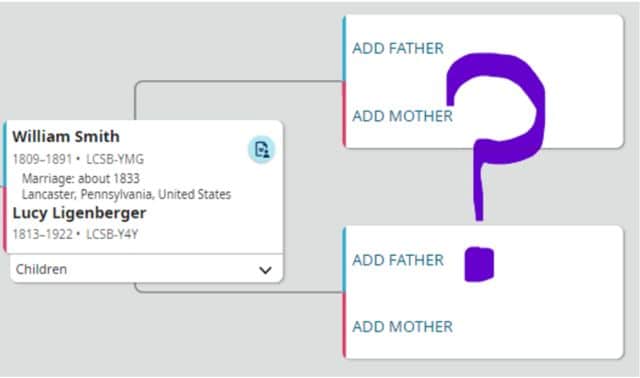
If you have already researched the selected ancestor or family, you may want to dig up your old research. If you collaborated with another relative to research the ancestor, you may wish to contact them about what’s already been done. You can also look up previously done research on an ancestor by searching for them in FamilySearch Family Tree (seen below), Ancestry Public Member Trees and Wiki Tree.
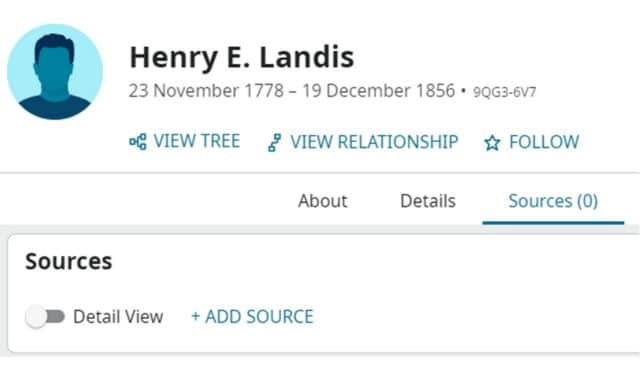
As you examine what is known about the ancestor, you will be able to figure out what you still need to learn about them. It’s also possible that every document that answers a question produces several more questions, so searching for additional documentation to answer those questions can also be a research objective.
How to Stay Focused
It is too easy to fall down a rabbit hole as you research. Each answer found usually raises new questions. It can be tempting to put aside your original research objective to pursue the answers to these new questions. However, doing this may lead you in multiple directions without finding an answer to your original question.
If you focus solely on your research question, you are more likely to find the answer. When you find a document that provides more questions than answers, note those questions for later. Any of them can be your primary objective for a future project.
In a recent client project, I began searching for land records. Shortly thereafter, I realized that probate records might also answer the question. It would have been easy to abandon land records for probate records, especially since I hadn’t yet found any. Instead, I stuck to land records and found land records for the ancestor. Had I divided my time between the two, I’d have found nothing. I noted down for the client to research probate records later.
How to Plan Effectively
Making a genealogy research plan can save you time. Once you identify your objective, list the record types that will give you the information you want to find. A more complicated problem may also require you to list record types that will provide clues to other record types.
Be sure to consider what record types are available for when and where your ancestors lived. If you are familiar with researching in that time and place, you already know what records are available and how to access them. If you are unfamiliar with that, you may need to do some background research to learn what records to search.
You may pursue this background research in several places. You use the search functions on sites like the FamilySearch or MyHeritage wikis, or the Family History Guide. You can look up videos on YouTube. You can look up books on Google Books or at your local library. How involved you get with your background research is up to you. The more you know about the time and place, the more effective your research will be.
The planning and background research may seem to delay you getting into the real research, but it will save time in the long run. It takes less time to learn what year birth registrations began than to search for the birth certificate of your ancestor who was born before that date. It takes less time to search for substitute records knowing that the courthouse was destroyed than to search for non-existent court records.
I once made a plan for New Jersey research. I listed newspapers from the 1750s in the plan and then discovered that New Jersey’s first newspaper began publication in the late 1770s. I would have wasted so much time had I conducted that research before making that discovery.
Time Management
Planning your research and focusing on your objectives will go a long way toward helping you get more out of your time researching your genealogy. The time-saving tips below will also help you avoid spending unnecessary time on your research.
Time Saving Tips
Whether or not you track your time doing genealogy, the following tips can help you save time in your research, allowing you to find more during your research sessions.
Use Clues
I once searched for a marriage record without the wife’s maiden name. A maiden name was claimed with no supporting evidence, so I excluded it. I later got her death record, which hinted to her maiden name. The search for the marriage record would have been more fruitful if I had waited until I had the death record.
Prioritize Search Order
After you identify which record types to search, determine the best order. Search the ones most likely to answer your research question first. When you have multiple databases for the same record type, prioritize those based on which is most likely to have your ancestor’s records and which will be easiest to search.
Research Logs
Tracking your research helps you avoid duplication, especially when you search a database and find nothing. With no record of the negative search, it is easy to forget that you’ve already searched and not found. This also keeps all your research for a particular line or family in one place so that you can refer to it more easily.
Browsing Images Online
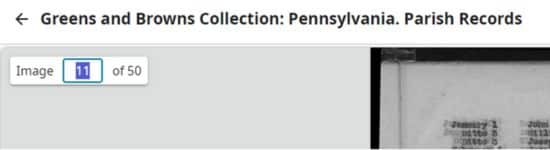
Sometimes, your search will lead you to a FamilySearch microfilm or book. If it has been digitized, you can view it on your computer. It may seem daunting to browse every image, but that may not be necessary.
Begin by determining how the digital images are organized. Are they alphabetical? Chronological? A combination of both? Once you determine this, you can navigate the images in the collection by clicking the thumbnails or typing a number into the image number box. When you get close to where your ancestors should be, go through the images one by one.
Tracking and Estimating Time
As a professional genealogist, I must keep track of my time researching for clients because those are billable hours. It is also helpful for me to estimate how many hours of research are needed to meet a client’s objective. An aspiring professional may want to get into the practice of tracking time spent on genealogy.
A hobbyist genealogist will have different needs for tracking and estimating time but may still find it helpful. I like to track time in my personal research because I find it easier to stay focused when I’m “on the clock.” If you are in the habit of tracking your time, you can more easily estimate how much research similar genealogy problems will require to solve. You may also find it helpful in balancing genealogy time with the non-genealogy aspects of your life.
Balance in Life
It is easy to lose track of time when sucked into a genealogy project. Some people can easily spend all day researching their genealogy or stay up all night without realizing how late they’ve been up. You may be of the mind that genealogy is life, especially if that’s why you subscribed to Family Tree Magazine.
As important as genealogy is to your life, it is good for your health to step away to eat and sleep. I have a lunch break alarm for this purpose. Taking care of your health will decrease the likelihood of health problems getting in the way of your genealogical research.
It is also good to spend time with your living family. I doubt your ancestors would approve of you forgetting your living family to research them.